
Luther's Paradox
On confessions and bound consciences. Deconstruction, step four (of eight).

In the previous chapter we played with a thought experiment. We imagined ourselves as classical Protestants travelling back through church history, all the way to Ephesus in the year 431. We found out that church councils had declared a number of controversial doctrines about Christ and the Trinity to be definite truths — doctrines that we, as classical Protestants, therefore could not accept. For we could not find sufficient support for them in scripture.
Let me clarify what this thought experiment shows us. It exposes something that I, as a classical Protestant, far too easily neglected: on its own, scripture cannot explain why doctrines that are at the very heart of classical Protestantism — the Trinity among them — should be treated as definite truths, that is truths essential to the one, true religion.
In Ephesus in the year 431, this became obvious to us. If we wished to remain classical Protestants, we had to reject the doctrine of the Trinity as an expression of definite truth. Or, turned the other way round: if we were to accept the Trinity as definite truth, we would have had to abandon classical Protestantism. For the doctrine of the Trinity undeniably adds something to scripture.
As we saw in chapter 5, we cannot as classical Protestants accept such additions. We cannot accept light that comes from any other source other than the sun, that is, holy scripture. And the light that showed us the Trinity came from elsewhere, at least in part. It came, specifically, from theologians using philosophical tools to discern the nature of Christ and God, and their work was then evaluated by councils convening centuries after Christ.
Thus, if we were to accept the developments in church history that we now take for granted as they unfolded, we could not have been classical Protestants.
//
For me, as a classical Protestant, it was tempting to attempt an alternative, slightly adjusted position: what the councils added is not something we can ever have definite knowledge about. We cannot know that God is triune. Insofar as the doctrine of the Trinity claims to be a definite truth, it therefore overreaches. Most likely the doctrine is correct — but who can say for sure?
But this position is difficult to defend. For what in scripture could we then claim to know with certainty, if not even the Trinity counts as a definitive truth about God? We end up with legitimate pluralism about even the most central of doctrines — and that undermines Christianity’s claim to be the one, true religion.
//
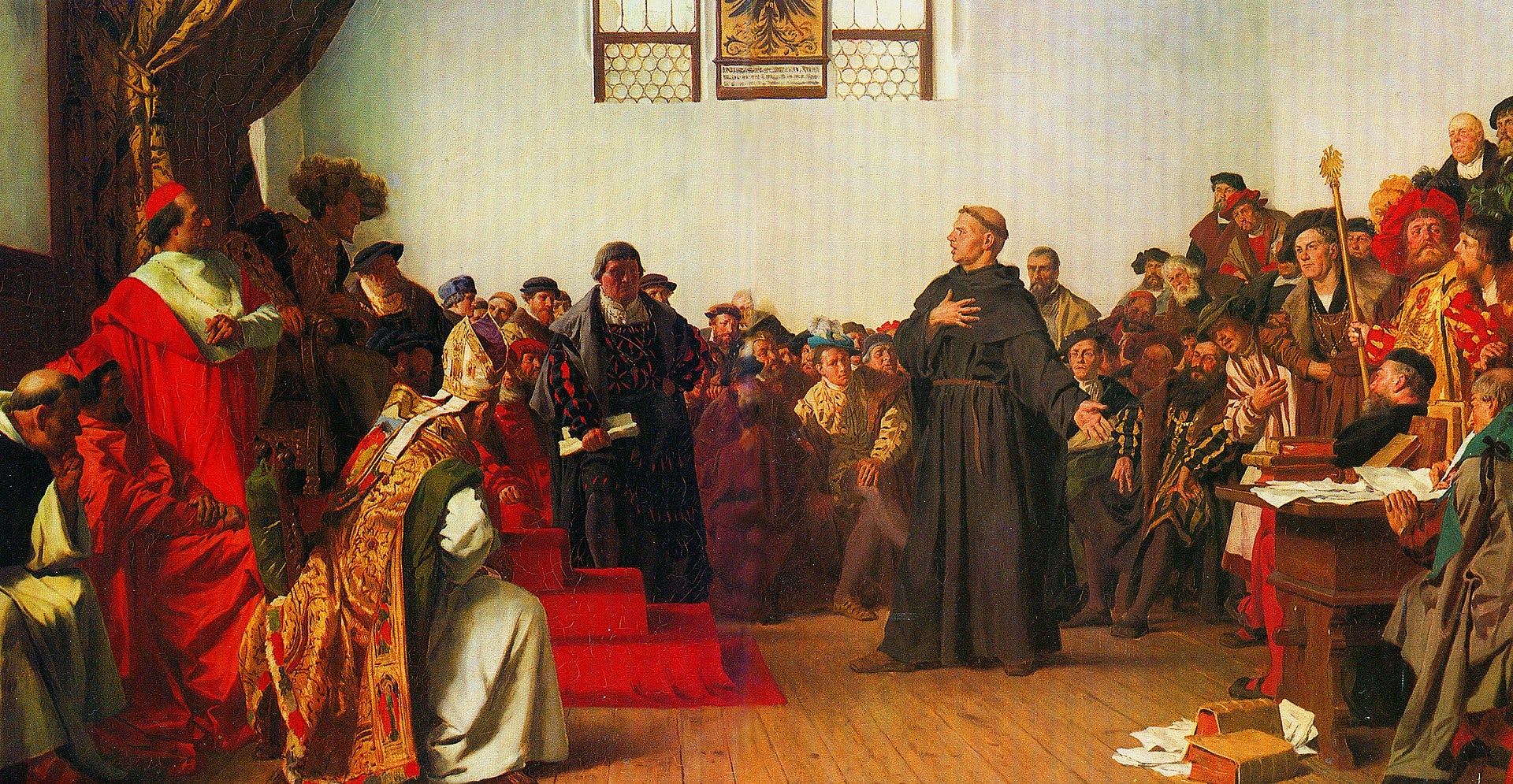
Luther is the figure who made Protestantism possible; in a sense, every Protestant is a Lutheran. And Luther, famously, refused to go against his conscience and submit to the Pope’s authority. Luther declared that he would be bound only by sound reason and scripture — and, we should add, by a Lutheran definition of which books of the scripture that count as holy. For Luther rejected, again famously, several books traditionally received as holy scripture.
Then Luther, like the other Reformers, insisted that all Christians should submit to his conscience. For it was the Lutheran confession that was true — not the Catholic confession (and later, of course, not the Reformed or the Anglican either). Naturally, neither Luther nor today’s Lutherans would call this confession an expression of ‘holy tradition’. But if it is not that, then by what authority can the Lutheran confession bind our conscience, unless our conscience already agree with Luther’s?
This is Luther’s paradox. And it strikes every kind of Protestantism.
